
My Search
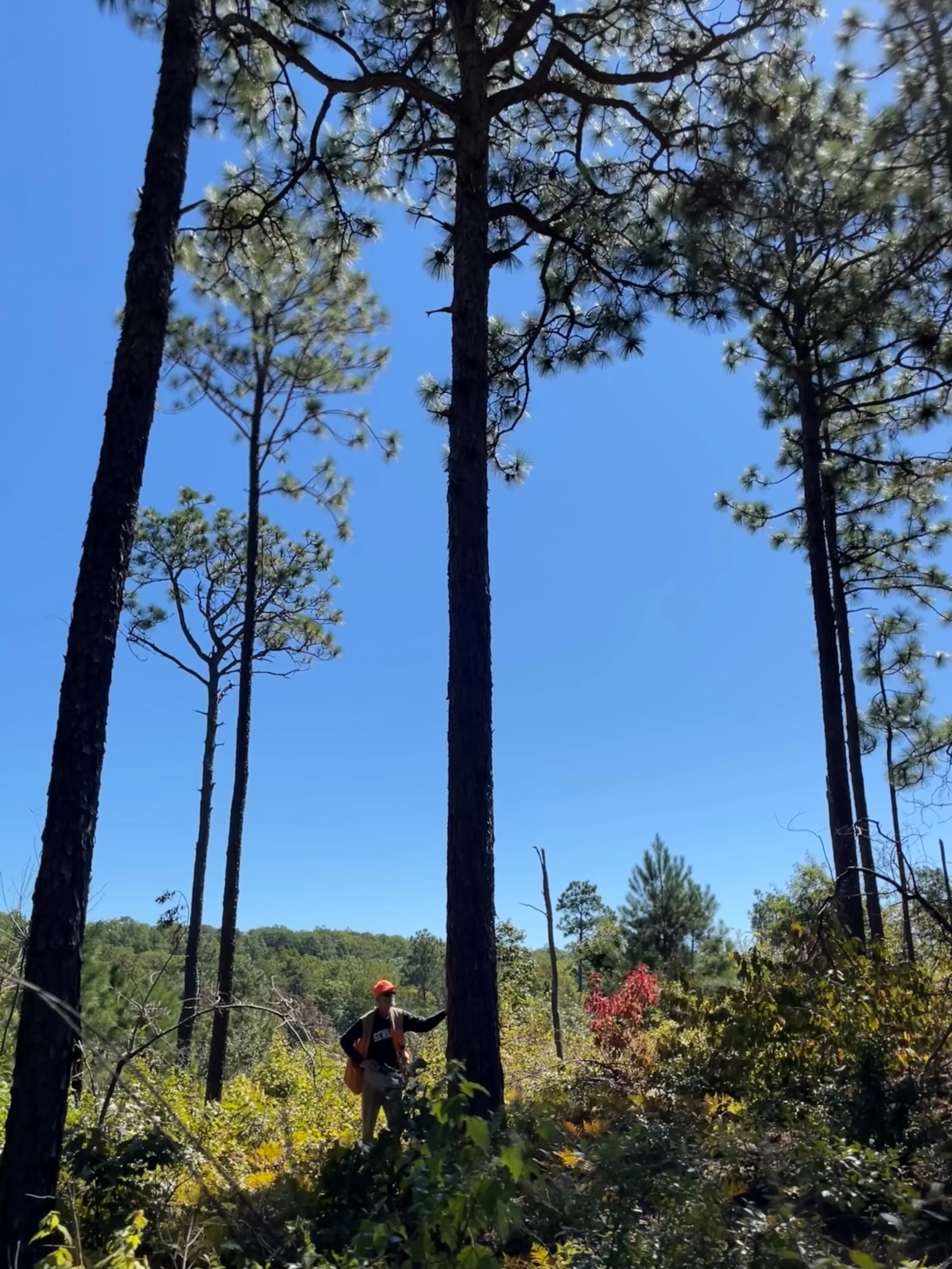
I am one of those landowners in the longleaf region of the southeastern United States with forestry objectives for which nursery seedlings are not a great fit. My property sits in the comparatively isolated, higher elevation montane longleaf region along the Pine Mountain Terrane about 60 miles south of Atlanta, Georgia. The slopes can be steep, the ground rugged and the Pacolet soils are rocky, all of which make site preparation and planting seedlings challenging at best. Further, the discovery of some uncommon plants on the property, including a newly identified member of the mint family, Clinopodium carteranium, and a stump sprouting American chestnut, Casteanea dentata, have dampened my enthusiasm for broadcast herbicide treatments as a part of any site preparation. In addition, one of my hopes is that we can preserve whatever genetic adaptations might exist among the century-old remnant trees on the property and elsewhere in the area. As a result, I have spent a great deal of time trying to solve the riddle of how to get from having a longleaf seed in a tree to having a longleaf seedling prospering in a desired location on the forest floor, all with the least possible inputs in between.
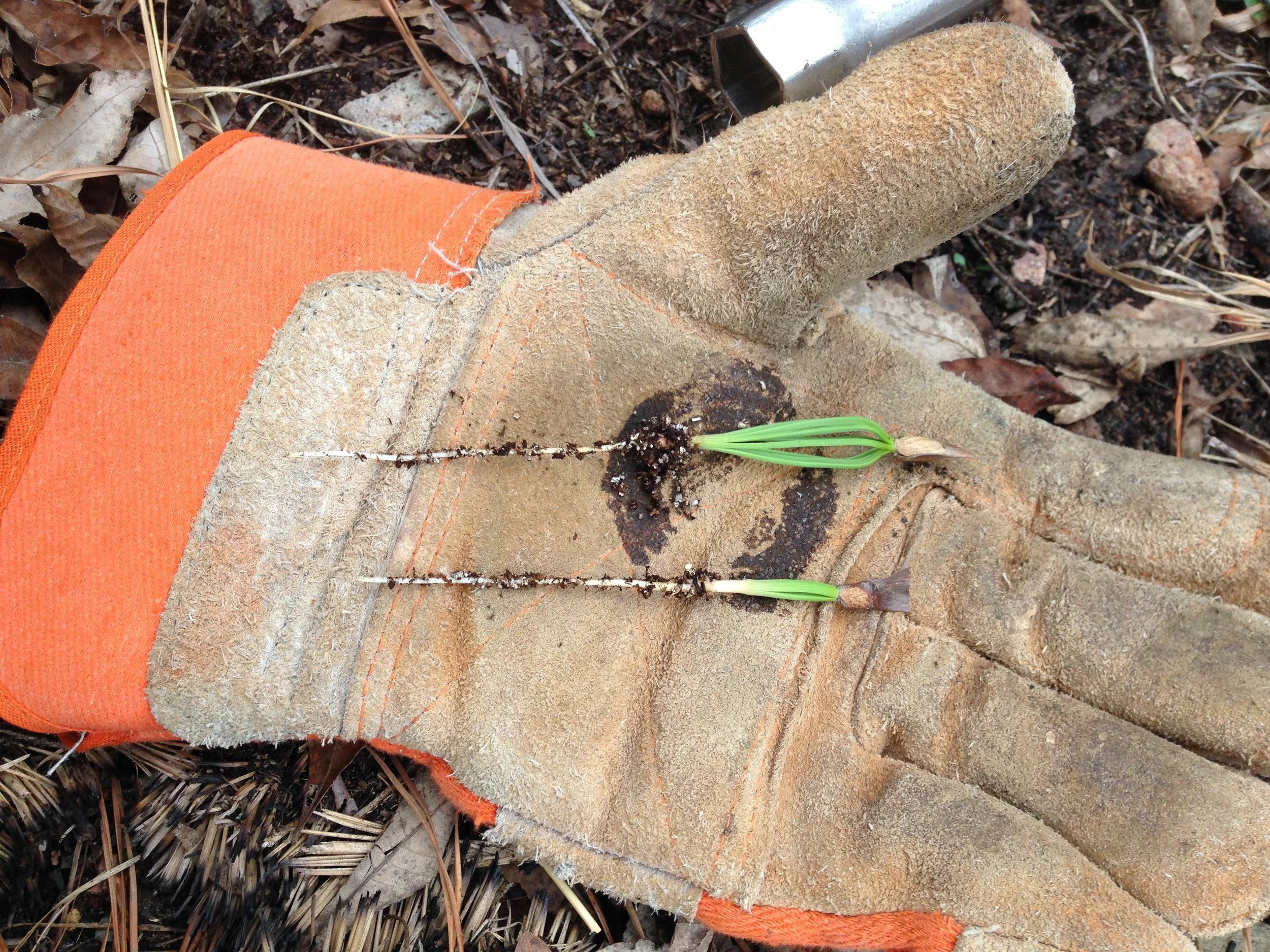
The path to precision direct seeding led from my efforts to plant home grown containerized longleaf from cones and seeds I collected on my property. (For more on do-it-yourself seed collection, go to Cones and Seeds.) To avoid both understocking containers and wasting precious seeds, I would put two seeds in each container and then transplant from those with two germinants to those with none. Since the germination and two-week survival rates often exceed 70%, I would invariably find myself with extra seedlings. Realizing how easily very young longleaf transplant between containers, I decided to try planting the roughly two-week old seedlings in the field. As it turns out, the very young seedlings tolerated the relocation to the woods surprisingly well.
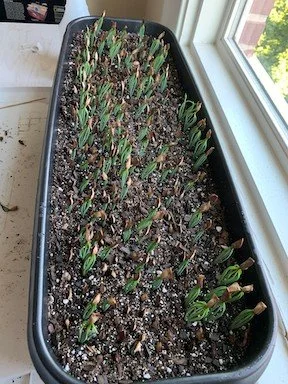
Planting what I came to call “bare root babies” (BRB) is vastly easier in my Pacolet soils than planting even a 6” container seedling, since that task requires a dibble stick looking more at home on a Viking ship than in the longleaf woods. In contrast, the hole for a BRB can be made with a spare chainsaw tool or screwdriver. I began experimenting with sowing the seeds for BRBs in various types of containers and found that cups, plastic pots, and flats all work well.
Although the ease of planting many dozens or even hundreds of seeds in flats at a single time proved attractive, smaller containers like 20-ounce drink cups or deep rooting plastic pots have a few advantages over larger flats. The smaller containers are easier to transport and handle in the field and serve to isolate disaster if dropped or left in a hot vehicle too long. Also, planting in smaller containers allows for the staggering of germination dates, making it more likely that the available number of BRBs ready for planting will match up with the number of people who can be talked into planting them (which has most often been one!).
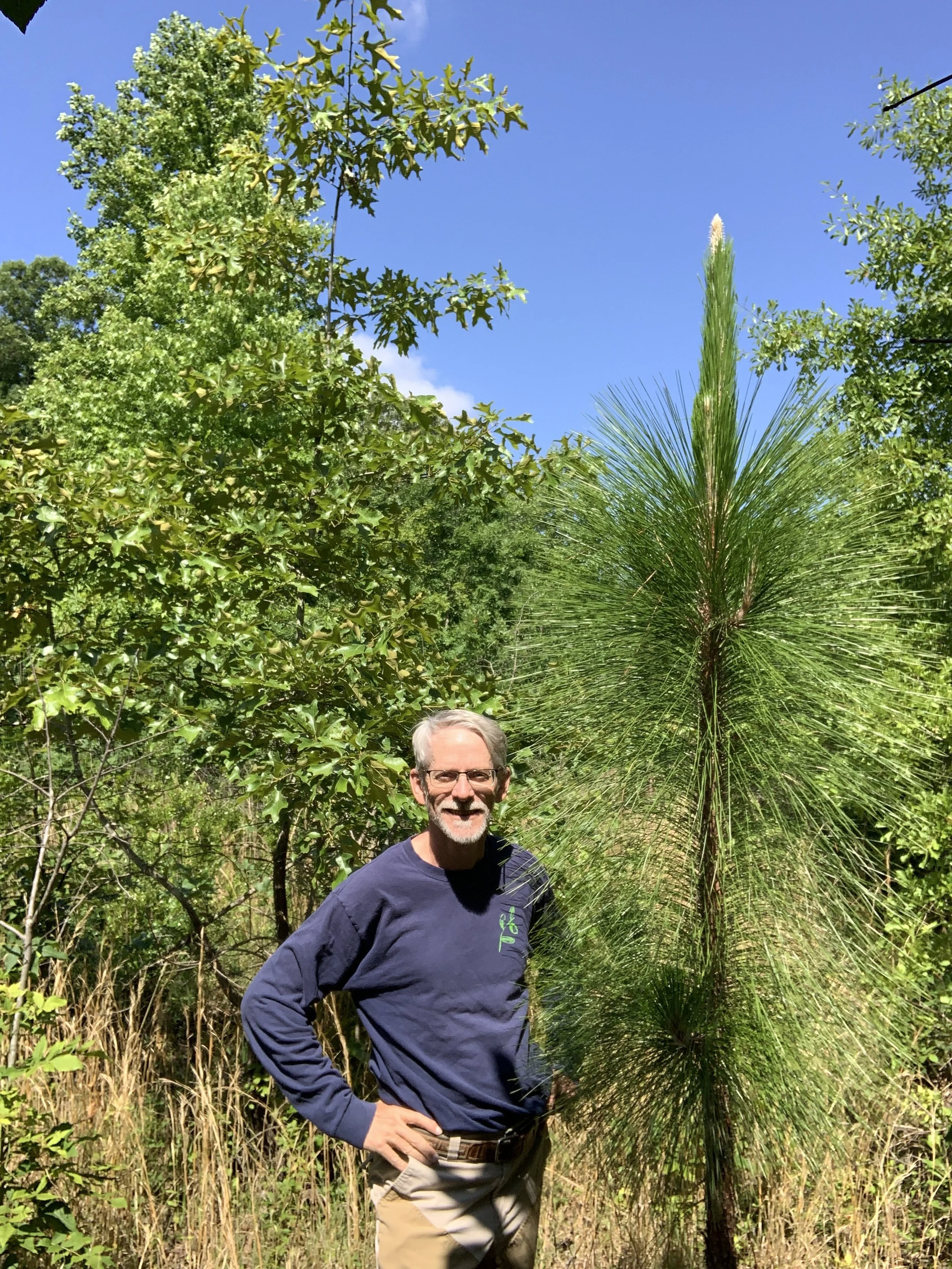
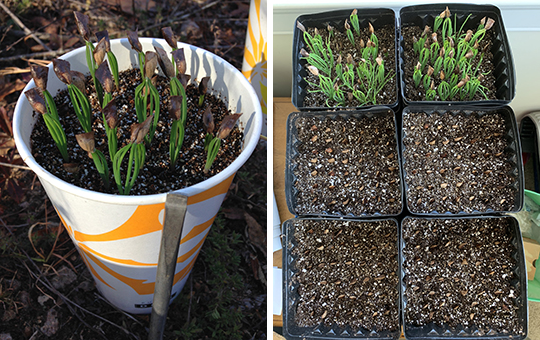
If left unmolested, longleaf BRBs transplanted to the woods have a near-term survival rate not unlike similarly-aged seedlings transplanted between two containers and, in the best microsites, will begin vertical height growth before the end of the second year. Unfortunately, I also quickly discovered that almost nothing newly introduced in the woods remains unmolested for very long. Deer seem especially curious about what people do in the woods, and I frequently found seedlings plucked out and laying on the ground at the tip of a fresh hoof print. Birds, rabbits and various rodents account for even greater losses, and I lost more than a few to my own poorly placed feet.
Searching for ways to reduce the animal mayhem, I began experimenting with various temporary shelters like the plastic mesh cone shown below. Curiously enough, the period of intense predation for longleaf seedlings only seems to last a few weeks, perhaps demarcated by the appearance of secondary needles. The presence of a shelter during this brief period significantly reduced losses to BRBs (although I did occasionally find evidence that deer had made sport of the shelters themselves!). Further, the removal of the shelter a couple of months later does not seem to produce the same uptick in predation that accompanies planting.
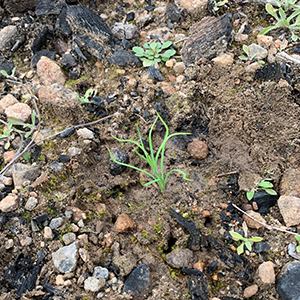
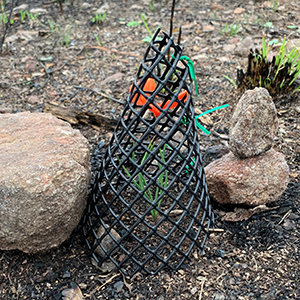
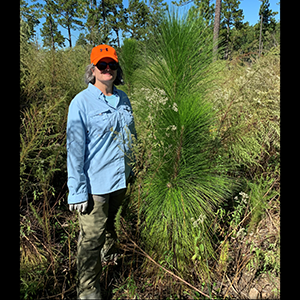
BRB on day of planting, at 6 weeks with mesh shield, and at three years (on superior microsite)
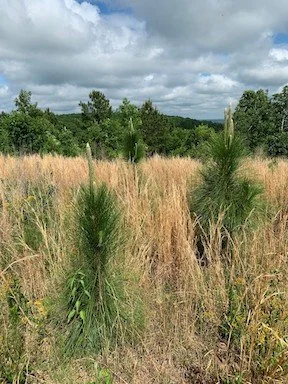
BRBs at 3.5 years
I have not run careful trials combining BRBs with shelters, but my rough estimate is that the multi-year survival rate has averaged about 25%. Thus, my humble assessment is that a BRB with its shelter removed around 10 to 12 weeks seems about on par for future prospects with a natural seedling at the same age and established in similar microsite conditions.
After way too much time for so simple a thought, it finally occurred to me that it might be possible to skip the step of germinating the BRBs in containers and instead simply plant the seeds themselves in the woods with the same degree of care I had been using when sowing seeds in the containers, a technique I call “precision direct seeding.” It worked!
In my experience, a seed carefully planted straight into the forest floor will germinate at close to the rate one gets in containers. In fact, natural regeneration of several iconic western conifers, including sugar, ponderosa and whitebark pine, depends heavily on “scatter hording” behavior in birds and rodents whereby seeds are buried in caches in the fall but forgotten by spring. For species dependent on scatter hording, I suspect that seeds will do best if buried perhaps a centimeter below the surface. For longleaf, however, I have achieved the best results inserting the ground with the radical end pointing down (meaning wing end up) so that most of the seed is below the surface, like the picture below on the left shows.
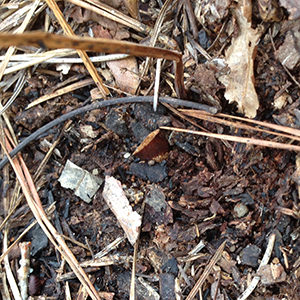
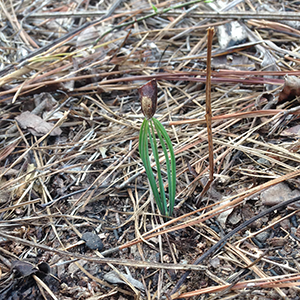
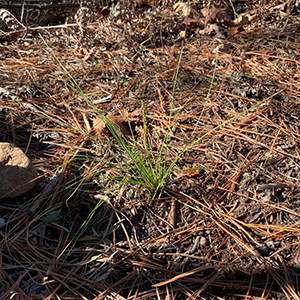
(Precision Direct Seed Test Plot 1 at planting, 4 weeks, and 24 months. Plot is in partially shaded understory location)
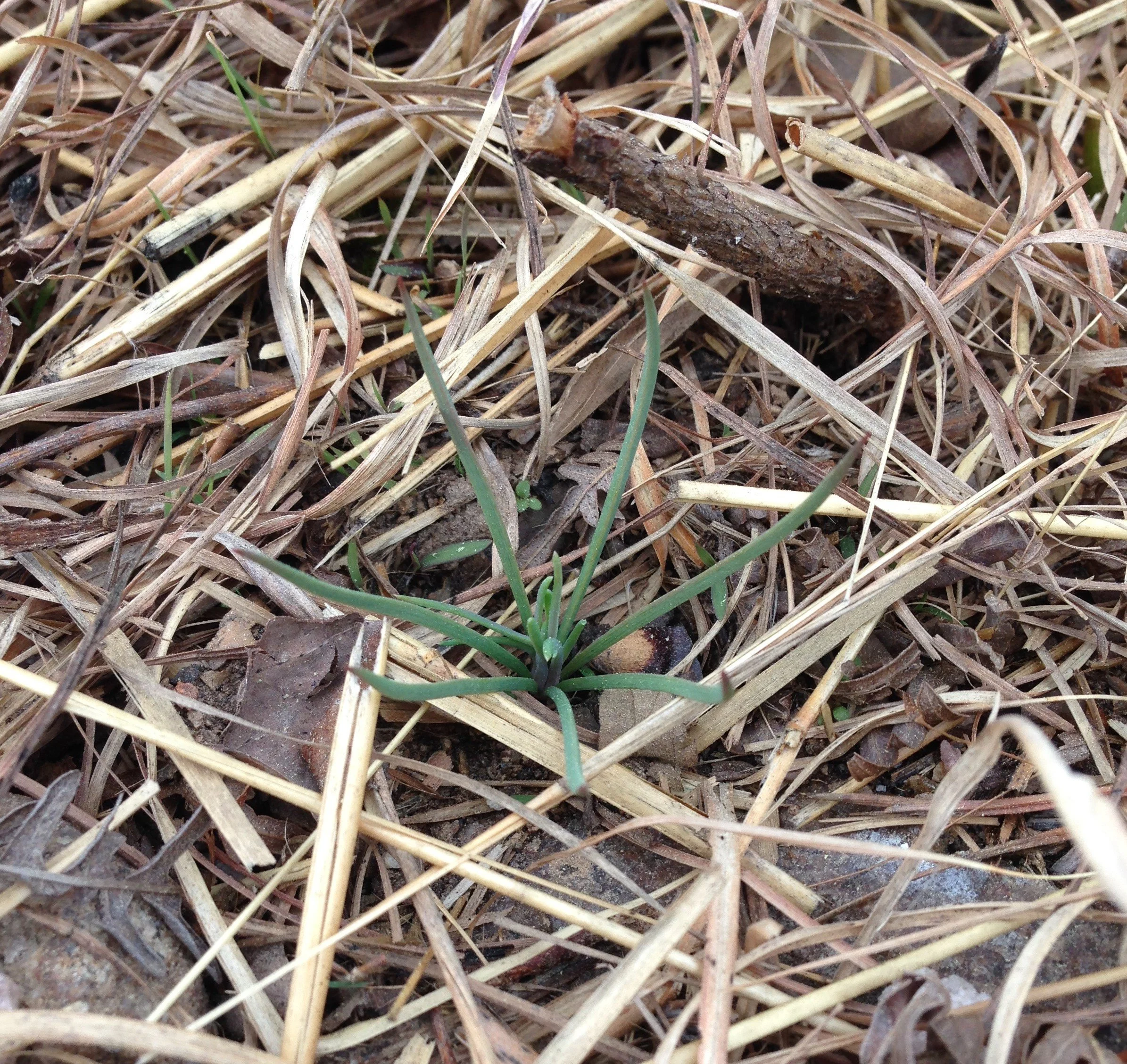
Precision Direct Seed Test Plot 2 (in mowed native grasses) pictured at five weeks
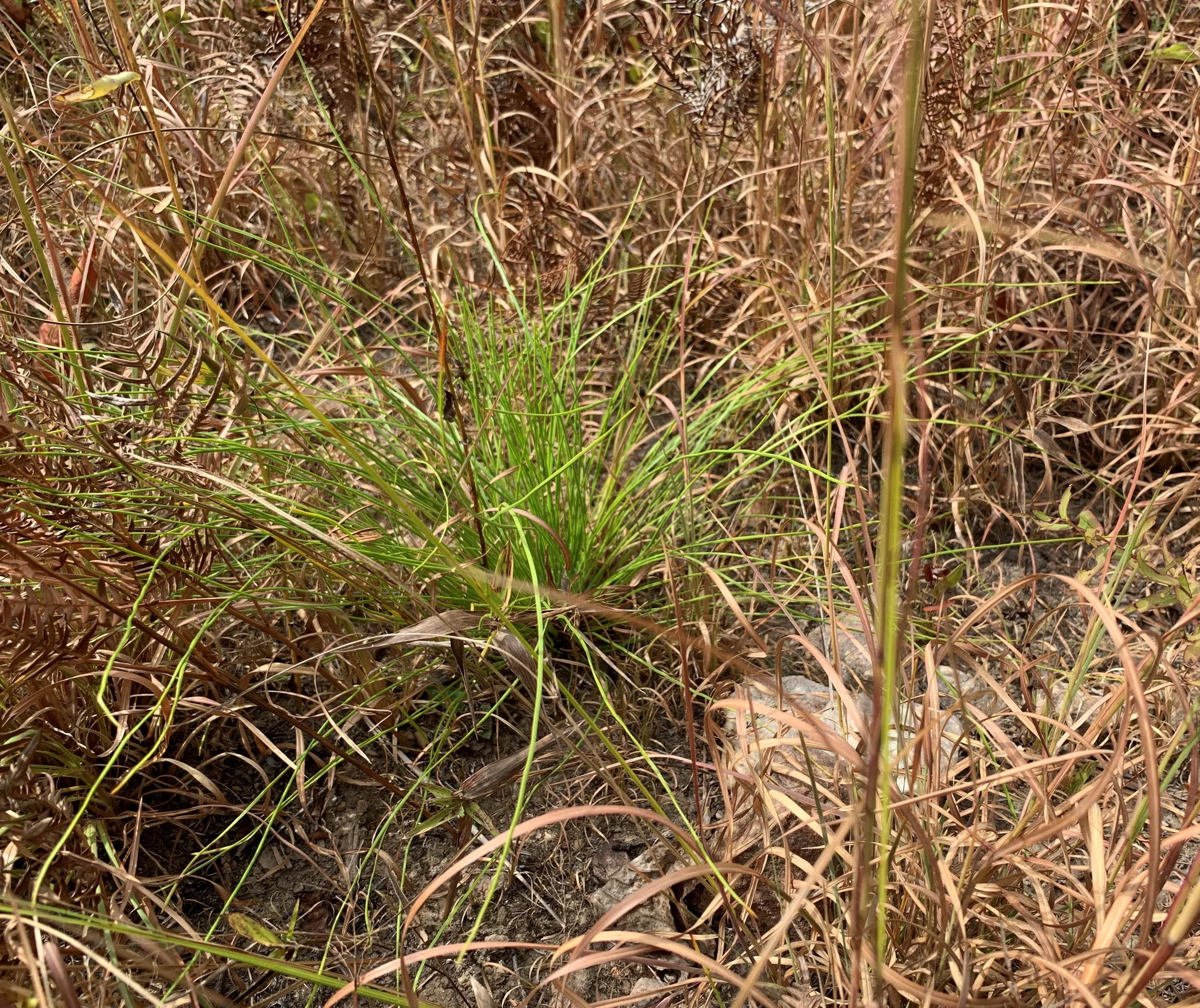
Precision Direct Seed Test Plot 2 at two years
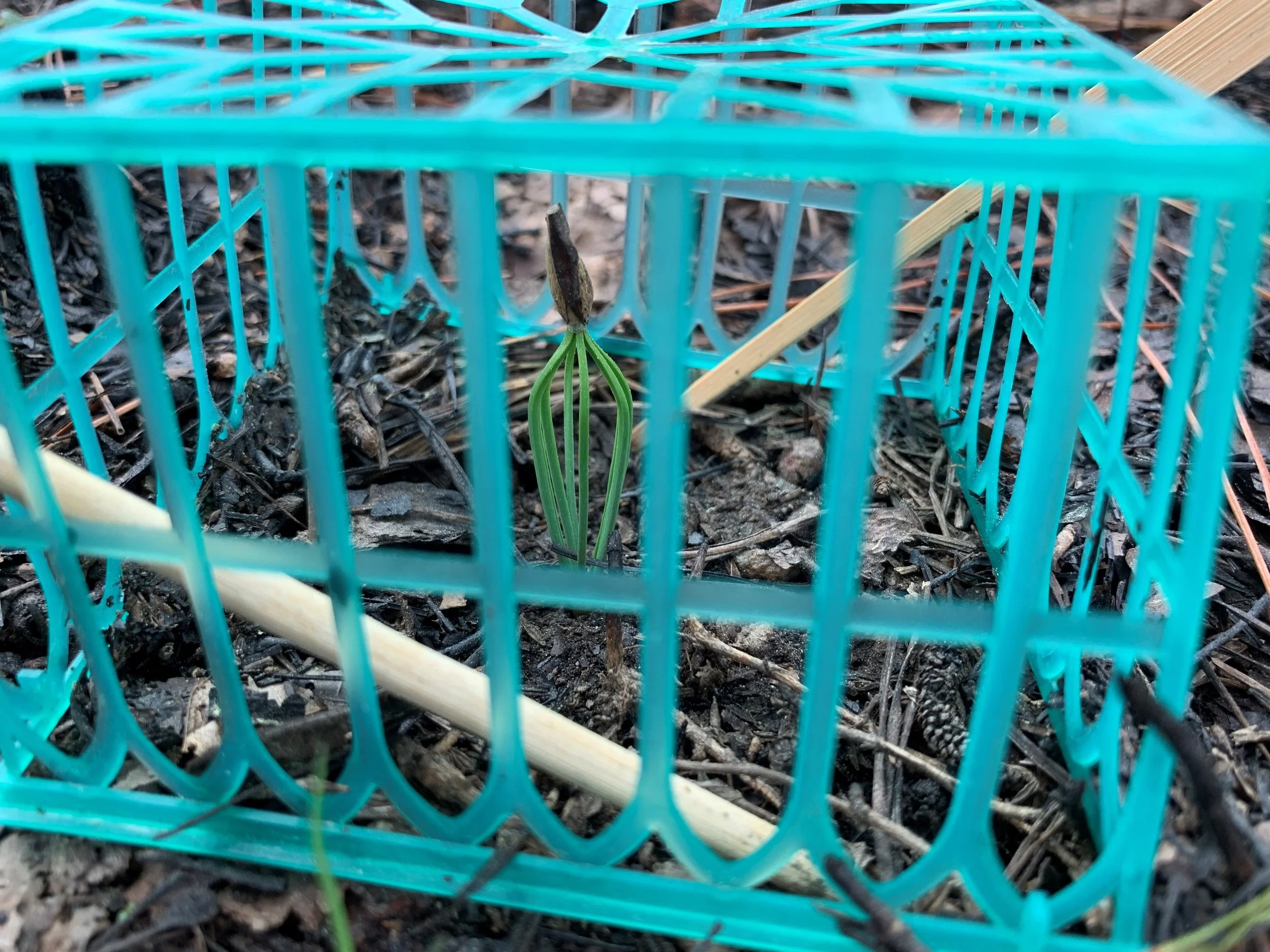
Unfortunately, the list of creatures finding longleaf seeds to be delicacies of the highest order seems to be nearly without end. As with BRBs, however, the rate of predation of seedlings established with precision direct seeding drops quickly, with losses becoming almost rare after about 10 to 12 weeks. Further, as with BRBs, a bit of predator deterrence during this high-predation period can tip the balance in favor of seedling survival. I experimented with various predator-deterring techniques, including mowing the planting sites before seeding (as shown in the picture above) and applying extra pine straw to planting sites, but with only limited success. Shelters, on the other hand, proved very effective. I switched from homemade plastic mesh shelters to small strawberry baskets, finding them both easier to source and handle in the field. As summarized in the “Trials” section, I have been able to produce consistent germination and three-month survival rates exceeding 50% (planting seeds with a >80% germination rate in greenhouse conditions), with average longer term survival rates in the 30% range, meaning three or four seeds placed in the ground with a decent shelter should produce at least one surviving seedling a year later. In other words (and perhaps unsurprisingly), a seedling germinated directly in the woods using precision direct seeding seems to have a survival probability similar to a natural seedling of the same age and in the same conditions.
It takes no great amount of imagination or experience to recognize that simply sticking a seed in the ground and covering it with a little basket compares favorably in terms of total inputs with the more conventional method of starting a seedling in a nursery and then transplanting it to a forest location. Indeed, the cost savings associated with precision direct seeding methods producing even a 25% long-term germination and survival rates may eventually prove economically competitive with planted seedlings, at least in settings where rapid merchantability of forest products is less important than overall cost of establishment, such as underplanting beneath late rotation plantations prior to final harvest or other reforestation projects motivated primarily by conservation or aesthetic objectives. Further, the root structure of a tree grown in situ from a seed may confer longer term benefits compared to nursery stock, a matter now only for speculation since substantially all transplanted longleaf are well under 100 years old.
Pausing a moment to reflect on the math, if precision direct seeding techniques can achieve a single-seed, one-year survival rate of 30%, simple probabilities would suggest that one would see higher success rates by planting two or more seeds per location (by “success” I mean having a seedling growing in the desired spot at the end of the one-year period). As discussed further under the “Trials” tab, the best results achieved to date for longleaf is in a group of plots that averaged >60% for single-seed survival rate and, with two seeds planted in each location, the per-spot success rate at the one-year mark was almost 80%. In simple terms, that means in four out of five spots where two seeds were stuck straight into the forest flow, at least one longleaf seedling was growing a year later.
A viable direct seeding method could make it practical for individual landowners to regenerate longleaf or other desirable species on their own property simply by collecting a few ripe cones or seeds, thereby expanding - indeed democratizing - conservation efforts. However, as the Canadians learned in the boreal forest decades ago, the obvious problem with anything like a strawberry basket is that it quickly clogs with other vegetation and, even if it remained free of competition, the basket itself would eventually impede the growth of the desired seedling. As such, any enclosed basket or cage needs to be revisited within weeks and eventually removed to avoid fouling. While retrieving light-weight easily stacked shelters like strawberry baskets may still be the lowest-total-inputs alternative, the imperative to retrieve 100% of shelters before fouling occurs would likely render deployment at scale impractical.
Puzzling over this problem, my first “a-ha moment” was to picture cutting the bottom out of a drink cup made of cornstarch plastic in a pattern that leaves protruding spikes or palisades. Turned upside down, the mostly solid plastic side seems to thwart or at least deters small mammals, birds and ground-crawling insects and, provided the length of the palisades are roughly equal to the diameter of the bottom opening, the palisade points seem to deter larger animals like deer and rabbit. At the same time, the open top allows other vegetation to grow alongside the desired seedling without fouling the shelter, and the risks associated with leaving a shelter made of cornstarch plastic in the woods seemed at least slightly less troubling than might be the case with petroleum-based plastics.
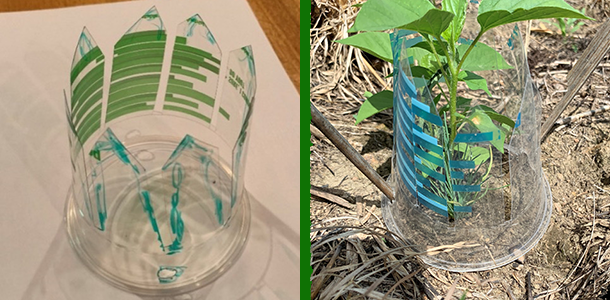
A second “aha moment” was the discovery that the palisade points could be curved inward, thereby helping deflect leaf litter and other detritus falling in the forest (which can be a problem with completely open-top guard designs deployed in understory settings) while still retaining enough flexibility not to impair seedling growth or become fouled by competing vegetation growing alongside the desired seedlings. The shortened secondary palisades increase the amount of rain entering the shelter and may reduce the greenhouse warming effect of the plastic in hot locations.
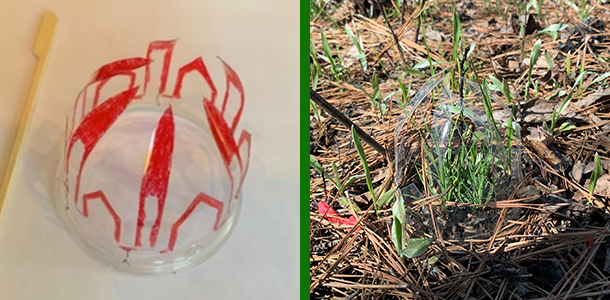
The process of trying to perfect methods of bending the palisade using various kitchen appliances led to a third idea, which is that the ideal shelter material for some applications would be biodegradable or at least pyro-degradable in the sense of being consumed by prescribed fire, the essential forest management tool for longleaf pine. As one might imagine, I spent a fairly absurd amount of time working with scissors to cut up compostable plastic cups before I had a design that seemed to work in the field. That design is now patented and the name Seed Crown is registered as a trademark, all in anticipation of making the shelters available to the public.